K-Fiction helps Korean learners practice reading through original short stories.
Each lesson combines a Korean story with an English translation, vocabulary, grammar, and a short reading quiz.
The stories are organized into A1, A2, and B1 levels, so you can choose a lesson that matches your current reading ability.
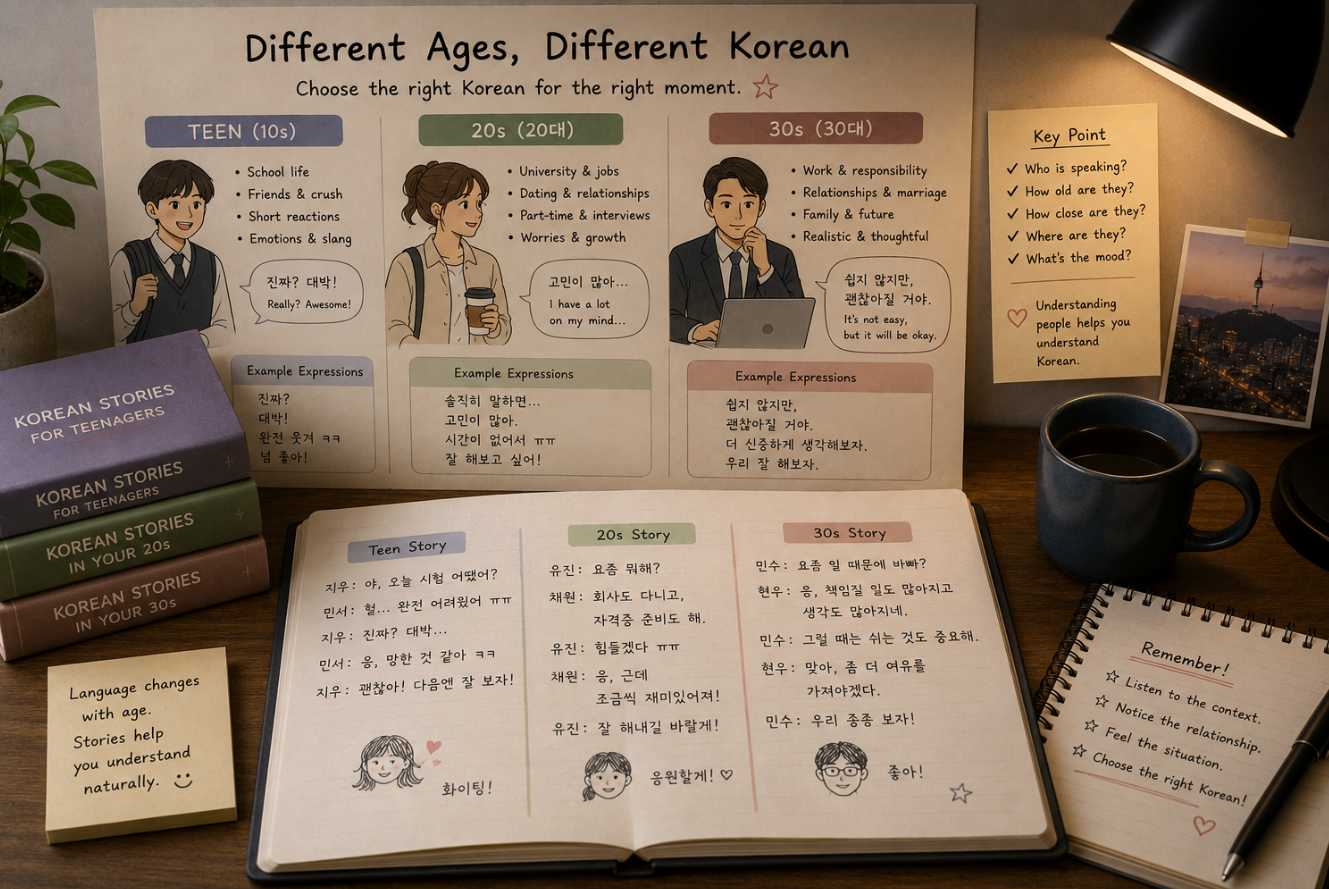
Why Learn Korean Through Stories?
Textbooks are useful for learning grammar and vocabulary.
Stories help you see how those words and grammar patterns are used in a real situation.
For example, Korean speech can change depending on:
- Who is speaking
- How close the people are
- Whether the situation is formal or casual
- Whether someone is speaking to a friend, teacher, coworker, or stranger
Reading stories helps you understand not only what a sentence means, but also why it is used in that situation.
Choose Your Level
A1 — Beginner
Choose A1 if you can read Hangul but still find Korean sentences difficult.
A1 lessons focus on:
- Short sentences
- Common everyday vocabulary
- Basic grammar
- Familiar situations
- Simple conversations
Your goal is to understand the main story without worrying about every word.
A2 — Elementary to Lower-Intermediate
Choose A2 if basic Korean sentences already feel familiar.
A2 lessons include:
- Longer conversations
- Everyday problems and situations
- Common grammar patterns
- Polite and casual expressions
- More vocabulary in context
At this level, try to follow several sentences together instead of translating each sentence separately.
B1 — Intermediate
Choose B1 if you can already understand the main idea of everyday Korean texts.
B1 lessons focus more on:
- Natural dialogue
- Tone and emotion
- Social relationships
- Longer sentence structures
- Meaning and nuance
At this level, ask not only what a sentence means, but also why it sounds natural in that situation.
How to Study a K-Fiction Lesson
You do not need to memorize everything in one lesson.
Try this simple method.
Step 1 — Read the Korean Story
Read the Korean text first.
Do not stop for every unfamiliar word.
Try to understand the characters, setting, and main event.
Step 2 — Check the English Translation
Use the English version to confirm anything you did not understand.
The translation is a support tool, not a replacement for reading Korean.
Step 3 — Read the Korean Again
Return to the Korean story.
This time, notice useful vocabulary and grammar that appeared in the story.
Step 4 — Review the Learning Points
Check the vocabulary and grammar sections.
Focus on a few expressions that you could use in everyday Korean.
Step 5 — Take the Quiz
Answer the reading questions without looking at the English translation if possible.
Then check your answers.
Why Read the Same Story Again?
You do not always need a new story to make progress.
A simple method is:
First reading: Understand the story.
Second reading: Notice vocabulary and grammar.
Third reading: Notice natural expressions and tone.
The story stays the same, but your understanding improves.
When Should You Try the Next Level?
Consider moving to the next level when:
- You can understand most of the story without constantly checking English
- Common vocabulary feels familiar
- You recognize important grammar patterns
- Your current level feels comfortable
You do not need to understand 100 percent before trying a harder lesson.
If the next level feels too difficult, simply return to an easier one.
Final Thoughts
K-Fiction is designed to complement Korean textbooks, not replace them.
A textbook explains the rules.
A story shows those rules being used by people in a situation.
Start with A1, A2, or B1, read the Korean first, use the translation when necessary, and then return to the Korean again.
The goal is not to understand everything perfectly on the first reading.
The goal is to make Korean feel more familiar each time you read.
Choose your level and start with one story.
AI Disclosure: This post was created with the assistance of AI and reviewed for educational quality, originality, and teen-friendly content.