k-story-lessons/A2

The Clock That Stopped at 4:20

k-fiction.com 2026. 7. 28. 19:13

Learn Korean through an original short story about an old wall clock, a neighborhood repair shop, and a memory hidden behind its wooden frame.

This lesson is designed for A2-level Korean learners. It includes a Korean story, natural English translation, essential vocabulary, grammar explanations, cultural notes, and a reading quiz.

What You Will Learn

  • Clock, repair, and family-memory vocabulary
  • Expressions used when requesting a repair
  • -(으)ㄴ 지, -아/어 두다, and -는 대신에
  • Korean neighborhood repair shops and after-school snack culture

Korean Story

네 시 이십 분에 멈춘 시계-Written by AI

아라는 서울의 작은 출판 회사에서 일했다.

회사에서 책의 표지를 확인하고 광고 문구를 만드는 것이 아라의 일이었다. 좋아하는 책을 가까이에서 볼 수 있어서 즐거웠지만, 마감이 가까워지면 밤늦게까지 일하는 날도 많았다.

어느 금요일 오후, 아라의 어머니에게 전화가 왔다.

“아라야, 이번 주말에 시간 있니?”

“토요일 오후에는 괜찮아요. 무슨 일이 있어요?”

“외할머니 집을 정리하려고 해. 필요한 물건이 있으면 가져가도 돼.”

아라의 외할머니는 두 달 전에 작은 요양원으로 이사했다.

할머니는 건강했지만 혼자 큰 집에서 생활하는 것이 불편해졌다. 가족들은 할머니가 자주 넘어질까 봐 걱정했다.

할머니가 사용하던 가구와 그릇 중 일부는 요양원으로 가져갔다. 나머지 물건들은 가족들이 정리하기로 했다.

“외할머니도 집에 오세요?”

Created by AI

“응. 어떤 물건을 남길지 직접 보고 싶다고 하셨어.”

“그럼 저도 갈게요.”

다음 날 오후, 아라는 어머니와 함께 외할머니 집에 갔다.

오래된 아파트 3층에 있는 집이었다.

현관문을 열자 익숙한 냄새가 났다. 비누 냄새와 나무 가구 냄새, 그리고 할머니가 자주 끓이던 보리차 냄새가 섞여 있었다.

외할머니는 거실 소파에 앉아 사진 앨범을 보고 있었다.

“할머니, 저 왔어요.”

“우리 아라 왔구나.”

아라는 할머니 옆에 앉아 손을 잡았다.

“요양원 생활은 괜찮아요?”

“친구들도 생겼고 밥도 잘 나와. 그런데 내 부엌이 없는 건 조금 아쉽지.”

할머니는 웃으며 말했다.

거실에는 아직 오래된 가구가 많이 남아 있었다. 나무 서랍장, 작은 텔레비전, 꽃무늬 방석과 유리 장식장이 보였다.

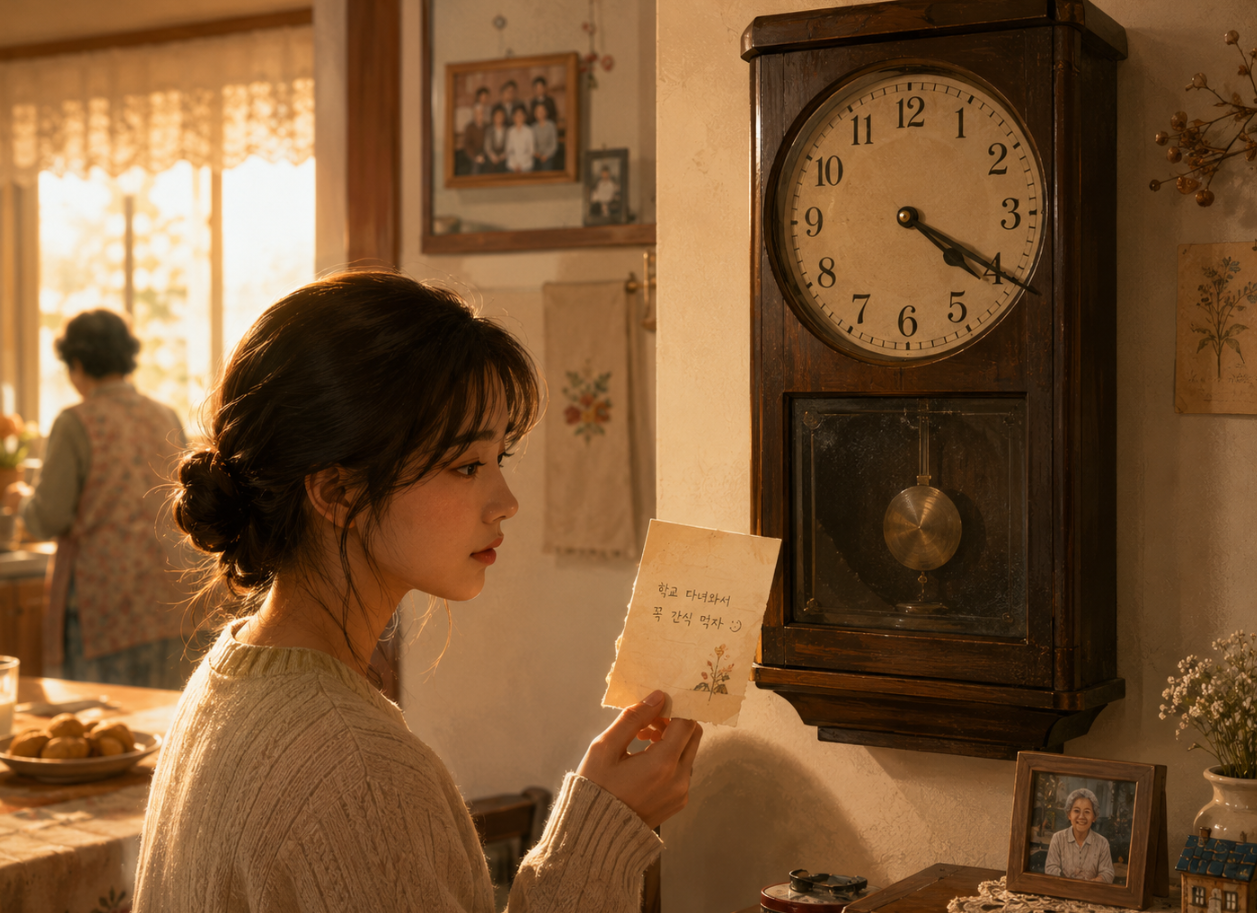
벽에는 커다란 나무 시계가 걸려 있었다.

시계의 긴바늘은 숫자 4를 가리키고 있었고, 짧은바늘은 4와 5 사이에 있었다.

시간은 네 시 이십 분이었다.

하지만 시계는 움직이지 않았다.

“이 시계 아직도 여기 있었네요.”

아라가 말했다.

어머니가 상자를 정리하며 대답했다.

“몇 년 전부터 고장 나 있었어. 버리려고 했는데 할머니가 계속 두라고 하셨지.”

아라는 의자를 가져와 시계를 벽에서 조심스럽게 내렸다.

시계는 생각보다 무거웠다. 둥근 유리 안에는 색이 바랜 숫자와 검은색 바늘이 있었다.

나무 테두리에는 작은 흠집도 여러 개 나 있었다.

“제가 어렸을 때도 이 시계가 있었죠?”

“그럼. 네 엄마가 고등학생일 때부터 있었어.”

할머니가 대답했다.

“거의 40년이나 된 시계네요.”

아라는 시계 뒷면을 확인했다.

배터리를 넣는 곳이 있었지만 뚜껑이 제대로 닫히지 않았다. 안에는 오래된 배터리가 들어 있었다.

“배터리만 바꾸면 다시 움직이지 않을까요?”

어머니가 고개를 저었다.

“전에 새 배터리를 넣어 봤는데 안 됐어.”

“수리점에 가져가 볼게요.”

“그렇게 오래된 시계를 고칠 수 있을까?”

“한번 물어볼게요.”

할머니는 시계를 바라보며 잠시 말이 없었다.

“고칠 수 있으면 좋겠구나.”

아라는 시계를 무릎 위에 올려놓았다.

“할머니는 이 시계가 왜 좋아요?”

“그냥 오래 봐서 정이 들었지.”

할머니는 짧게 대답했지만, 시계를 바라보는 표정은 조금 특별해 보였다.

아라는 시계를 버리지 않고 자신의 집으로 가져가기로 했다.

어머니는 시계를 큰 수건으로 감싸 주었다.

“유리가 깨지지 않게 조심해.”

“네. 차 뒷좌석에 눕혀 놓을게요.”

집으로 돌아온 아라는 거실 바닥에 시계를 놓았다.

인터넷에서 오래된 시계를 수리하는 곳을 검색했다.

집 근처에는 대형 수리 센터가 없었다. 대신 지하철역 뒤편의 오래된 상가에 작은 시계 수리점이 하나 있었다.

가게 이름은 한성시계수리였다.

사진을 보니 손목시계와 벽시계를 모두 고쳐 주는 곳 같았다.

월요일은 쉬는 날이었고, 평일에는 저녁 7시까지 영업한다고 적혀 있었다.

아라는 화요일에 조금 일찍 퇴근하기로 했다.

화요일 오후 5시 40분, 아라는 회사 컴퓨터를 끄고 시계가 든 가방을 들었다.

팀장에게 인사하자 팀장이 물었다.

“오늘은 큰 가방을 가져왔네요.”

“오래된 벽시계를 수리하러 가려고요.”

“요즘은 벽시계도 수리해요?”

“저도 잘 모르겠어요. 일단 가 보려고요.”

아라는 지하철을 타고 집 근처 역에서 내렸다.

역 뒤편 상가는 새로 지은 건물들 사이에 숨어 있었다. 좁은 골목에는 세탁소, 열쇠 가게, 구두 수선집과 작은 식당이 있었다.

상가 끝에 작은 간판 하나가 보였다.

한성시계수리
시계 판매·수리
배터리 교체

유리문 안에는 크고 작은 시계들이 가득했다.

아라는 문을 열고 들어갔다.

문 위의 작은 종이 맑은 소리를 냈다.

“어서 오세요.”

작업대 뒤에 앉아 있던 남자가 고개를 들었다.

회색 머리를 짧게 자른 60대 남자였다. 코끝에는 작은 안경이 걸려 있었다.

“벽시계도 수리하시나요?”

“어떤 시계인지 먼저 볼까요?”

아라는 가방에서 수건으로 감싼 시계를 꺼냈다.

남자는 시계를 작업대 위에 놓고 앞뒤를 자세히 살펴보았다.

“오래된 시계네요.”

“외할머니가 오랫동안 사용하신 거예요.”

“마지막으로 움직인 게 언제인지 알아요?”

“정확히는 모르지만 고장 난 지 몇 년은 된 것 같아요.”

남자는 뒷면의 배터리를 꺼냈다.

“배터리가 안에서 조금 녹슬었네요. 오래 넣어 두면 이렇게 될 수 있어요.”

“고칠 수 있을까요?”

“열어 봐야 알 수 있습니다. 기계 전체를 바꿔야 할 수도 있고요.”

“시간이 많이 걸리나요?”

“오늘 맡겨 두시면 내일 오후에 연락드릴게요.”

아라는 잠시 고민했다.

“수리비는 얼마나 나올까요?”

“간단한 수리면 15,000원 정도고, 안쪽 기계를 교체하면 30,000원 정도입니다.”

“고칠 수 있다면 기계를 교체해도 괜찮아요.”

남자는 종이에 아라의 이름과 전화번호를 적었다.

“시계 바늘은 지금 네 시 이십 분에 멈춰 있네요.”

“네. 처음부터 계속 그 시간이었어요.”

남자가 시계를 다시 바라보았다.

“특별한 시간인가요?”

“잘 모르겠어요. 우연히 그때 멈춘 것 같아요.”

아라는 수리 접수증을 받아 가방에 넣었다.

“유리와 나무 테두리는 그대로 두고 싶어요.”

“걱정하지 마세요. 고장 난 안쪽 부품만 확인해 보겠습니다.”

“잘 부탁드립니다.”

가게를 나온 아라는 빈 가방이 이상하게 가볍게 느껴졌다.

다음 날 오후, 회의 중에 수리점에서 전화가 왔다.

아라는 회의가 끝난 뒤 다시 전화를 걸었다.

“어제 벽시계를 맡긴 김아라입니다.”

“네, 시계 수리가 끝났습니다.”

“정말 고쳐졌어요?”

“안쪽 기계는 교체했지만 바늘과 나무 부분은 그대로 두었습니다. 지금 잘 움직이고 있어요.”

“오늘 찾으러 가겠습니다.”

“그리고 시계 뒷면에서 작은 종이 한 장이 나왔어요.”

“종이요?”

“뒷판 안쪽에 접어서 넣어 놓은 것 같아요. 오시면 함께 드릴게요.”

아라는 종이에 무엇이 적혀 있는지 궁금했다.

퇴근 시간이 되자마자 수리점으로 향했다.

가게에 도착했을 때 벽시계는 작업대 옆에 세워져 있었다.

초침이 규칙적으로 움직이고 있었다.

똑, 똑, 똑.

오랜 시간 멈춰 있던 시계가 다시 소리를 내고 있었다.

“잘 움직이네요.”

아라는 시계를 보며 웃었다.

수리점 주인은 작은 투명 봉투를 건넸다.

“이 종이가 기계 뒤쪽에 붙어 있었습니다.”

봉투 안에는 오래된 메모지가 들어 있었다.

종이는 누렇게 변했고 한쪽 끝은 조금 찢어져 있었다.

아라는 조심스럽게 종이를 꺼냈다.

아라 학교 끝나는 시간
오후 4시 20분
간식 준비하기
— 2002년 3월

글씨 아래에는 작은 동그라미가 그려져 있었다.

아라는 한동안 아무 말도 하지 못했다.

“가족분이 적어 놓은 것 같네요.”

수리점 주인이 말했다.

“외할머니 글씨예요.”

아라는 메모를 다시 읽었다.

2002년이면 아라가 초등학교에 입학한 해였다.

아라는 학교가 끝난 뒤 매일 외할머니 집으로 갔다.

부모님이 모두 일을 했기 때문에 할머니가 아라를 돌봐 주었다.

아라가 집에 도착하면 식탁 위에는 언제나 간식이 준비되어 있었다.

주먹밥, 삶은 고구마, 떡볶이 또는 사과를 작게 자른 접시가 놓여 있었다.

할머니는 아라가 몇 시에 오는지 잊지 않기 위해 시계 안에 메모를 넣어 둔 것 같았다.

“그래서 시계가 네 시 이십 분에 멈춰 있었나 봐요.”

아라가 조용히 말했다.

“우연히 그 시간에 멈췄을 수도 있지만, 의미가 있는 시간이었네요.”

수리점 주인이 대답했다.

아라는 수리비 30,000원을 계산했다.

주인은 시계를 다시 수건으로 감싸 주었다.

“배터리는 1년에 한 번 정도 확인하세요. 오랫동안 사용하지 않을 때는 빼 두는 게 좋습니다.”

“네. 이번에는 잘 관리할게요.”

아라는 시계와 메모를 들고 집으로 돌아왔다.

거실 벽에 시계를 걸기 전에 시간을 맞추었다.

휴대전화에는 저녁 7시 35분이라고 표시되어 있었다.

아라는 시곗바늘을 천천히 움직였다.

하지만 네 시 이십 분을 지나갈 때 잠시 손을 멈췄다.

어린 아라가 책가방을 메고 외할머니 집 문을 열던 모습이 떠올랐다.

“할머니, 저 왔어요!”

그러면 부엌에서 할머니의 목소리가 들렸다.

“손부터 씻고 와. 고구마 쪄 놓았어.”

아라는 시계를 현재 시간에 맞추고 거실 벽에 걸었다.

다음 날 점심시간, 아라는 어머니에게 메모 사진을 보냈다.

시계 안에서 이게 나왔어요.
할머니가 쓰신 것 같아요.

어머니에게 곧 전화가 왔다.

“이 메모가 시계 안에 있었어?”

“네. 제가 학교 끝나던 시간을 적어 놓으셨어요.”

어머니는 잠시 조용했다.

“네가 초등학생일 때 할머니가 매일 시계를 보셨거든.”

“기억나요?”

“그럼. 네가 늦으면 베란다 창문에서 길을 계속 바라보셨어.”

“저는 항상 간식만 기억했어요.”

“할머니는 네가 오기 한 시간 전부터 준비하셨어.”

아라는 목이 조금 뜨거워지는 것을 느꼈다.

“이번 주에 할머니를 만나러 갈래요?”

“나도 같은 생각을 했어.”

토요일 오후, 아라와 어머니는 요양원을 방문했다.

아라는 고친 벽시계와 메모를 함께 가져갔다.

외할머니는 휴게실에서 다른 할머니들과 화투 그림 맞추기 놀이를 하고 있었다.

“할머니, 저 왔어요.”

“아라 왔구나.”

아라는 시계를 보여 주었다.

“시계 고쳤어요.”

할머니의 얼굴이 밝아졌다.

“정말 움직이네.”

“그런데 수리하다가 시계 안에서 이것도 나왔어요.”

아라는 투명 봉투 속의 메모를 건넸다.

할머니는 안경을 쓰고 메모를 읽었다.

처음에는 아무 말도 하지 않았다.

그러다가 천천히 웃었다.

“이게 아직도 있었구나.”

“할머니가 쓰신 거 맞죠?”

“응. 네가 초등학교에 들어간 뒤에 써 놓았지.”

“왜 시계 안에 넣었어요?”

“잘 보이는 곳에 붙이면 네가 장난칠까 봐.”

할머니는 웃었다.

어린 아라는 집 안의 메모지에 그림을 그리거나 종이비행기를 만드는 것을 좋아했다.

그래서 할머니는 중요한 메모를 시계 뒤에 숨겨 놓았다.

“그런데 왜 시계가 정확히 네 시 이십 분에 멈춘 걸까요?”

“그건 나도 모르지.”

할머니는 시계의 움직이는 바늘을 바라보았다.

“아마 시계도 네가 오던 시간을 기억했나 보다.”

아라는 할머니 옆에 앉았다.

“제가 학교에서 늦게 온 날도 많았어요?”

“가끔 친구하고 놀다가 늦었지.”

“그럴 때 할머니가 많이 걱정했어요?”

“조금 걱정했지만 화를 내지는 않았어. 네가 문을 열고 들어오면 그걸로 됐지.”

할머니는 메모의 날짜를 손가락으로 만졌다.

“그때는 네가 아주 작았는데 벌써 회사원이 되었네.”

“할머니가 매일 간식을 만들어 줘서 잘 컸어요.”

“지금도 떡볶이 좋아하니?”

“물론이죠.”

“내 부엌만 있었으면 오늘도 만들어 줬을 텐데.”

요양원에는 공동 주방이 있었지만 개인이 자유롭게 요리하기는 어려웠다.

아라는 좋은 생각이 났다.

“다음 주에 외출해서 같이 떡볶이 먹으러 가요.”

“밖에 나가도 되나?”

“미리 신청하면 된대요. 제가 알아볼게요.”

“그럼 너무 맵지 않은 곳으로 가자.”

아라는 요양원 직원에게 시계를 방에 걸어도 되는지 물었다.

벽에 못을 박을 수는 없었지만, 선반 위에 세워 둘 수는 있었다.

아라는 할머니 방의 작은 서랍장 위에 시계를 놓았다.

시계는 침대에서도 잘 보였다.

“시계를 할머니 방에 둘까요?”

할머니는 잠시 생각한 뒤 고개를 저었다.

“아라 네가 가져가.”

“할머니가 좋아하는 시계잖아요.”

“나는 이제 시간을 알려 주는 휴대전화도 있고 벽에도 시계가 있어.”

할머니는 메모를 가리켰다.

“저 시계는 이제 네가 가지고 있을 이유가 생겼잖니.”

아라는 시계를 다시 바라보았다.

“그럼 잘 보이는 곳에 걸어 둘게요.”

“배터리도 오래 넣어 두지 말고.”

“수리점 아저씨도 똑같이 말했어요.”

두 사람은 웃었다.

일주일 뒤, 아라는 할머니와 외출했다.

어머니도 함께 동네의 작은 분식집에 갔다.

아라는 떡볶이와 김밥, 어묵을 주문했다.

할머니를 위해 맵지 않은 궁중떡볶이도 한 접시 주문했다.

“이건 내가 만들던 떡볶이하고 다르네.”

할머니가 떡볶이를 맛보며 말했다.

“할머니 떡볶이가 더 맛있었어요.”

“그때는 네가 뭐든 잘 먹어서 맛있다고 한 거야.”

“아니에요. 정말 맛있었어요.”

식사를 마친 시간은 오후 네 시쯤이었다.

분식집을 나온 뒤 세 사람은 근처 공원을 천천히 걸었다.

어린아이들이 학교 가방을 메고 지나갔다.

그중 한 아이가 할머니에게 전화를 걸었다.

“할머니, 저 학교 끝났어요. 지금 가고 있어요.”

아라와 외할머니는 동시에 그 아이를 바라보았다.

할머니가 말했다.

“요즘 아이들도 할머니 집에 가나 보네.”

아라는 휴대전화 시간을 확인했다.

오후 네 시 이십 분이었다.

“할머니, 지금 몇 시인지 알아요?”

“네 시 이십 분이네.”

두 사람은 잠시 서로를 바라보다가 웃었다.

집에 돌아온 아라는 벽시계 아래에 작은 액자를 하나 걸었다.

액자 안에는 할머니의 메모를 복사한 종이를 넣었다.

원본은 투명 파일에 넣어 서랍 안에 안전하게 보관해 두었다.

시계는 매일 같은 속도로 움직였다.

아침에는 출근 시간을 알려 주었고, 저녁에는 하루가 끝나 가는 것을 알려 주었다.

그리고 오후 네 시 이십 분이 되면 아라는 가끔 시계를 바라보았다.

그 시간은 더 이상 멈춰 있는 시간이 아니었다.

누군가 자신을 기다리고 있었고, 따뜻한 간식이 준비되어 있었으며, 문을 열고 들어가는 것만으로도 반가움을 받을 수 있었던 시간이었다.


Natural English Translation

The Clock That Stopped at 4:20

Ara worked at a small publishing company in Seoul.

Her job was to check book covers and write advertising text. She enjoyed being close to books she liked, but when deadlines approached, she often worked until late at night.

One Friday afternoon, Ara received a phone call from her mother.

“Ara, do you have time this weekend?”

“I’m free on Saturday afternoon. Is something happening?”

“We’re going to organize your grandmother’s house. You can take anything you need.”

Ara’s maternal grandmother had moved into a small care home two months earlier.

She was healthy, but living alone in a large home had become inconvenient. Her family was worried that she might fall.

Some of her furniture and dishes had been taken to the care home. The family planned to organize the remaining items.

“Will Grandma come to the house too?”

“Yes. She wants to decide which things to keep.”

“Then I’ll come.”

The following afternoon, Ara visited her grandmother’s apartment with her mother.

It was on the third floor of an old apartment building.

When they opened the front door, Ara noticed a familiar smell. It was a mixture of soap, wooden furniture, and the barley tea her grandmother often made.

Her grandmother was sitting on the sofa and looking through a photo album.

“Grandma, I’m here.”

“My Ara has come.”

Ara sat beside her and held her hand.

“Are you comfortable at the care home?”

“I have made some friends, and the food is good. But I miss having my own kitchen.”

Her grandmother smiled.

Many old pieces of furniture remained in the living room. There was a wooden chest of drawers, a small television, flower-patterned cushions, and a glass cabinet.

A large wooden clock hung on the wall.

The minute hand pointed to four, and the hour hand was between four and five.

The time was 4:20.

However, the clock was not moving.

“This clock is still here.”

Ara’s mother answered while organizing a box.

“It stopped working several years ago. I wanted to throw it away, but Grandma told me to leave it.”

Ara brought a chair and carefully took the clock down from the wall.

It was heavier than she expected. Behind the round glass were faded numbers and black hands.

There were several small marks on the wooden frame.

“This clock was here when I was a child, wasn’t it?”

“Of course. We had it when your mother was in high school.”

“It must be almost 40 years old.”

Ara checked the back.

There was a place for a battery, but the cover did not close properly. An old battery was still inside.

“Maybe it will work if we change the battery.”

Her mother shook her head.

“We tried a new battery before, but it didn’t work.”

“I’ll take it to a repair shop.”

“Can someone repair such an old clock?”

“I’ll ask.”

Her grandmother looked at the clock without speaking for a moment.

“It would be nice if it could be repaired.”

Ara placed the clock on her knees.

“Why do you like this clock?”

“I’ve seen it for so long that I became attached to it.”

Her answer was simple, but her expression seemed special.

Ara decided to take the clock home instead of throwing it away.

Her mother wrapped it in a large towel.

“Be careful not to break the glass.”

“I’ll lay it on the back seat.”

At home, Ara placed the clock on the living room floor.

She searched online for a place that repaired old clocks.

There was no large repair center nearby. However, there was a small clock repair shop in an old shopping area behind the subway station.

It was called Hanseong Clock Repair.

The online photographs suggested that the owner repaired both wristwatches and wall clocks.

The shop was closed on Mondays and remained open until seven on weekdays.

Ara decided to leave work slightly early on Tuesday.

At 5:40 on Tuesday afternoon, she turned off her office computer and picked up the bag containing the clock.

Her team leader asked a question.

“You brought a large bag today.”

“I’m taking an old wall clock to a repair shop.”

“Do people still repair wall clocks?”

“I’m not sure. I’m going to ask.”

Ara took the subway and got off near her home.

The old shopping area behind the station was hidden between newer buildings. The narrow street contained a laundry, a key shop, a shoe repair store, and several small restaurants.

At the end of the street, Ara saw a small sign.

Hanseong Clock Repair
Clock Sales and Repair
Battery Replacement

Many clocks of different sizes filled the shop.

Ara opened the door.

A small bell above it made a clear sound.

“Welcome.”

A man sitting behind a workbench looked up.

He appeared to be in his sixties and had short gray hair. Small glasses rested near the end of his nose.

“Do you repair wall clocks?”

“May I see it first?”

Ara removed the towel-wrapped clock from her bag.

The man placed it on the workbench and carefully examined the front and back.

“This is an old clock.”

“My grandmother used it for a long time.”

“Do you know when it last worked?”

“I’m not sure, but it has been broken for several years.”

He removed the battery.

“It has corroded slightly. That can happen when a battery remains inside for too long.”

“Can you repair it?”

“I need to open it first. I may need to replace the entire mechanism.”

“Will it take a long time?”

“If you leave it today, I’ll contact you tomorrow afternoon.”

Ara thought for a moment.

“How much will it cost?”

“A simple repair will be around 15,000 won. Replacing the mechanism will be around 30,000 won.”

“You can replace it if that is necessary.”

The man wrote Ara’s name and phone number on a form.

“The hands have stopped at 4:20.”

“Yes. They have shown that time for years.”

“Is it a special time?”

“I don’t know. I think the clock stopped there by chance.”

Ara put the repair receipt in her bag.

“I would like to keep the glass and wooden frame.”

“Don’t worry. I’ll only examine the broken parts inside.”

The following afternoon, the repair shop called while Ara was in a meeting.

She returned the call afterward.

“This is Kim Ara. I left a wall clock yesterday.”

“Yes. The repair is finished.”

“Does it really work?”

“I replaced the mechanism, but kept the original hands and wooden frame. It is moving well now.”

“I’ll come and collect it today.”

“I also found a small piece of paper inside the back of the clock.”

“A piece of paper?”

“It appeared to have been folded and placed behind the back panel. I’ll give it to you when you arrive.”

Ara wondered what could be written on it.

She went to the repair shop as soon as work ended.

The wall clock was standing beside the workbench.

Its second hand moved regularly.

Tick, tick, tick.

After being silent for years, the clock was making a sound again.

“It works well.”

Ara smiled.

The repair shop owner handed her a small clear envelope.

“This paper was behind the mechanism.”

Inside was an old note.

The paper had become yellow, and one edge was slightly torn.

Ara carefully removed it.

Time Ara finishes school
4:20 p.m.
Prepare a snack
— March 2002

A small circle was drawn below the writing.

Ara could not speak for a moment.

“It looks like someone in your family wrote it.”

“It is my grandmother’s handwriting.”

The year 2002 was when Ara entered elementary school.

She went to her grandmother’s house every day after school.

Because both of her parents worked, her grandmother looked after her.

Whenever Ara arrived, a snack was waiting on the table.

There might be rice balls, steamed sweet potatoes, tteokbokki, or a plate of sliced apples.

Her grandmother had probably placed the note inside the clock so that she would not forget what time Ara arrived.

“Maybe that is why the clock stopped at 4:20.”

Ara spoke quietly.

“It may have stopped there by chance, but it became a meaningful time.”

Ara paid the 30,000-won repair fee.

The owner wrapped the clock in the towel again.

“Check the battery about once a year. Remove it if you are not going to use the clock for a long time.”

“I will take good care of it this time.”

At home, Ara prepared to hang the clock in the living room.

Her phone showed 7:35 p.m.

She slowly moved the hands.

However, when they passed 4:20, she stopped for a moment.

She remembered her childhood self opening her grandmother’s door with a school backpack.

“Grandma, I’m here!”

Her grandmother’s voice would come from the kitchen.

“Wash your hands first. I steamed some sweet potatoes.”

Ara adjusted the clock to the current time and hung it on the wall.

The next day, she sent a picture of the note to her mother.

I found this inside the clock.
I think Grandma wrote it.

Her mother called soon afterward.

“This was inside the clock?”

“Yes. She wrote down the time I finished school.”

“When you were in elementary school, she watched that clock every day.”

“Do you remember?”

“Of course. If you were late, she stood by the balcony window and watched the street.”

“I only remember the snacks.”

“She began preparing them an hour before you arrived.”

Ara felt her throat become warm.

“Shall we visit Grandma this weekend?”

“I was thinking the same thing.”

On Saturday afternoon, Ara and her mother visited the care home.

Ara brought the repaired clock and the note.

Her grandmother was in the lounge playing a picture-matching game with several other residents.

“Grandma, I’m here.”

“Ara has come.”

Ara showed her the clock.

“I repaired it.”

“It is really moving again.”

“But the repairman also found this inside.”

Ara handed her the note in the clear envelope.

Her grandmother put on her glasses and read it.

At first, she said nothing.

Then she slowly smiled.

“This was still inside?”

“You wrote it, didn’t you?”

“Yes. I placed it there after you began elementary school.”

“Why did you put it inside the clock?”

“I thought you might play with it if I left it somewhere visible.”

Her grandmother laughed.

When Ara was young, she liked drawing on notes and making paper airplanes.

For that reason, her grandmother had hidden the important note behind the clock.

“Why did the clock stop at exactly 4:20?”

“I don’t know that either.”

Her grandmother watched the moving hands.

“Maybe the clock also remembered the time you came home.”

Ara sat beside her.

“Was I often late after school?”

“Sometimes you played with your friends.”

“Were you very worried?”

“A little. But I wasn’t angry. It was enough when you opened the door and came inside.”

Her grandmother touched the date on the note.

“You were so small then, but now you are an office worker.”

“I grew well because you prepared snacks for me every day.”

“Do you still like tteokbokki?”

“Of course.”

“I would make it for you today if I still had my kitchen.”

The care home had a shared kitchen, but residents could not cook freely.

Ara had an idea.

“Let’s go out and eat tteokbokki next week.”

“Can I go outside?”

“We can apply in advance. I’ll ask.”

“Then let’s choose a place that isn’t too spicy.”

Ara asked an employee whether the clock could be hung in her grandmother’s room.

They could not put a nail in the wall, but they could stand it on a shelf.

Ara placed it on a small chest of drawers where it could be seen from the bed.

“Should we leave it here?”

Her grandmother thought for a moment and shook her head.

“You should take it.”

“But you like this clock.”

“I have a phone that tells me the time, and there is already a clock on the wall.”

She pointed to the note.

“Now you have a reason to keep this clock.”

“Then I’ll hang it somewhere I can see it.”

“And don’t leave the battery inside for too long.”

“The repairman said exactly the same thing.”

They laughed.

One week later, Ara went out with her grandmother and mother.

They visited a small snack restaurant in the neighborhood.

Ara ordered tteokbokki, gimbap, and fish cakes.

She also ordered a plate of mild royal-style tteokbokki for her grandmother.

“This is different from the tteokbokki I used to make.”

“Your tteokbokki tasted better.”

“You thought everything was delicious because you ate well.”

“No. It really was delicious.”

They finished eating at around four in the afternoon.

After leaving the restaurant, they walked slowly through a nearby park.

Children carrying school backpacks passed them.

One child called her grandmother.

“Grandma, school is over. I’m coming now.”

Ara and her grandmother looked at the child at the same time.

“Children still go to their grandmothers’ houses these days.”

Ara checked her phone.

It was 4:20 p.m.

“Grandma, do you know what time it is?”

“It’s 4:20.”

They looked at each other and smiled.

When Ara returned home, she hung a small frame below the wall clock.

Inside the frame was a copy of her grandmother’s note.

She placed the original inside a clear file and stored it safely in a drawer.

The clock continued moving at the same speed every day.

In the morning, it told Ara when to leave for work. In the evening, it showed that the day was coming to an end.

Whenever it reached 4:20 p.m., Ara sometimes looked at it.

It was no longer a time that had stopped.

It was the time when someone had waited for her, a warm snack had been prepared, and opening the door was enough to make someone happy.


Essential Vocabulary

KoreanRomanizationMeaning

벽시계 byeoksigye wall clock
시곗바늘 sigyetbaneul clock hand
긴바늘 ginbaneul minute hand
짧은바늘 jjalbeunbaneul hour hand
초침 chochim second hand
멈추다 meomchuda to stop
고장 나다 gojang nada to break down
수리하다 surihada to repair
수리점 surijeom repair shop
부품 bupum part; component
기계 gigye mechanism; machine
교체하다 gyochehada to replace
녹슬다 nokseulda to become rusty
배터리를 빼다 baeteorireul ppaeda to remove a battery
테두리 teduri frame; border
흠집 heumjip scratch
접수증 jeopsujeung service receipt
맡기다 matgida to leave something in someone’s care
메모지 memoji memo paper
간식 gansik snack
돌보다 dolboda to take care of
정이 들다 jeongi deulda to become emotionally attached
요양원 yoyangwon care home
외출하다 oechulhada to go out
보관하다 bogwanhada to store; keep safely

Key Grammar

1. -(으)ㄴ 지

This expression shows how much time has passed since an action or situation began.

Story Example

시계가 고장 난 지 몇 년은 된 것 같아요.

It seems that several years have passed since the clock broke.

More Examples

서울에 이사 온 지 6개월이 됐어요.
It has been six months since I moved to Seoul.

한국어를 공부한 지 얼마나 됐어요?
How long has it been since you began studying Korean?

친구를 만난 지 오래됐어요.
It has been a long time since I met my friend.

밥을 먹은 지 두 시간밖에 안 됐어요.
It has only been two hours since I ate.


2. -아/어 두다

This grammar means to do something in advance and leave it ready for later.

Story Examples

할머니가 간식을 준비해 두었어요.

Grandmother prepared a snack in advance.

메모를 시계 안에 넣어 두었어요.

She placed the note inside the clock and left it there.

More Examples

기차표를 미리 사 두었어요.
I bought the train ticket in advance.

필요한 전화번호를 저장해 두세요.
Save the necessary phone numbers for later.

손님이 오기 전에 방을 청소해 두었어요.
I cleaned the room before the guest arrived.

음식을 조금 만들어 두면 편해요.
It is convenient to prepare some food in advance.


3. -는 대신에

This expression means “instead of doing something” or describes an alternative.

Story Example

시계를 버리는 대신에 수리하기로 했어요.

Ara decided to repair the clock instead of throwing it away.

More Examples

택시를 타는 대신에 지하철을 탔어요.
I took the subway instead of a taxi.

밖에서 먹는 대신에 집에서 요리했어요.
I cooked at home instead of eating outside.

새 제품을 사는 대신에 고쳐서 사용했어요.
I repaired and used the item instead of buying a new one.

커피 대신에 차를 마실게요.
I’ll drink tea instead of coffee.


Useful Korean Expressions

KoreanNatural English Meaning

이 시계도 수리할 수 있나요? Can you repair this clock too?
고장 난 지 오래됐어요. It has been broken for a long time.
먼저 상태를 확인해 볼게요. I’ll check its condition first.
오늘 맡겨 두시면 돼요. You can leave it here today.
수리비가 얼마나 나올까요? How much will the repair cost?
원래 부분은 그대로 두고 싶어요. I would like to keep the original parts.
수리가 끝나면 연락드릴게요. I’ll contact you when the repair is complete.
정이 많이 들었어요. I became very attached to it.
잘 보이는 곳에 놓아 둘게요. I’ll leave it somewhere visible.
안전하게 보관해 두세요. Keep it stored safely.
시간이 정말 빠르네요. Time passes so quickly.
아직도 기억나요. I still remember it.

Korean Culture Notes

Small Neighborhood Repair Shops

Older Korean neighborhoods may have small specialized repair shops, including:

  • 시계 수리점: clock and watch repair shop
  • 구두 수선집: shoe repair shop
  • 열쇠집: key shop
  • 전파사: electronics repair shop
  • 세탁소: laundry and dry cleaner

These shops are often operated by people with many years of experience.

Instead of replacing an old item, customers may visit a repair shop when the item has emotional or practical value.

A useful expression is:

새것을 사는 것보다 고쳐 쓰고 싶어요.
I would rather repair and use it than buy a new one.


The Meaning of 정이 들다

정 is a Korean word describing affection or emotional attachment that develops through shared time and experience.

정이 들다 can be used for:

  • A person you have known for a long time
  • A home where you have lived
  • A neighborhood
  • A pet
  • An old object

For example:

오래 살다 보니 이 동네에 정이 들었어요.
After living here for a long time, I became attached to this neighborhood.

The object does not need to be expensive. Time and memory can make it valuable.


After-School Snacks at a Grandparent’s Home

In many Korean families, grandparents care for children while their parents are at work.

Children may go to a grandparent’s home after school and eat a snack before their parents return.

Common snacks include:

  • 고구마: sweet potatoes
  • 떡: rice cakes
  • 김밥: gimbap
  • 주먹밥: rice balls
  • 떡볶이: spicy rice cakes
  • 과일: fruit

The question 학교 잘 다녀왔어? means “Did you have a good day at school?” It is a common and warm greeting when a child returns home.


Reading Comprehension Quiz

1. Why was Ara’s family organizing her grandmother’s house?

A. They wanted to sell the clock.
B. Her grandmother had moved to a care home.
C. Ara was moving into the apartment.
D. The apartment needed repairs.

2. At what time had the wall clock stopped?

A. 3:40
B. 4:00
C. 4:20
D. 5:20

3. What did the repair shop owner find inside the clock?

A. An old photograph
B. A handwritten memo
C. Some money
D. A train ticket

4. Why had Ara’s grandmother written the memo?

A. To remember when Ara finished school
B. To remember when the shop closed
C. To record the time the clock broke
D. To remember a hospital appointment

5. Why did 4:20 become meaningful to Ara?

Write your answer in one or two sentences.


Quiz Answers

  1. B — Her grandmother had moved to a care home.
  2. C — 4:20
  3. B — A handwritten memo
  4. A — To remember when Ara finished school
  5. It was the time when Ara arrived at her grandmother’s home after school. Her grandmother waited for her and prepared a warm snack in advance.

Final Review

After studying this story, you should be able to:

  • Talk about clocks and repairing old objects.
  • Ask about repair costs and completion time.
  • Describe how long it has been since something happened with -(으)ㄴ 지.
  • Explain something prepared in advance using -아/어 두다.
  • Describe an alternative with -는 대신에.
  • Understand the Korean expression 정이 들다.

Read the Korean story once more without looking at the English translation. Then practice describing an object with a special memory:

저는 __________에 정이 많이 들었어요.

I have become deeply attached to __________.

멈춘 시계도 다시 움직일 수 있지만, 그 안에 담긴 시간은 마음속에서 계속 흐른다.

A stopped clock can move again, but the time held inside it continues flowing in the heart.


This is an original educational short story created for K-Fiction.com. All characters and events are fictional.

'k-story-lessons > A2' 카테고리의 다른 글

The Tomato Plant on the Rooftop  (0) 2026.07.28
The Photograph Between the Pages  (1) 2026.07.28
The Recipe in the Paper Bag  (0) 2026.07.28
The Package at the Wrong Door  (0) 2026.07.28
The Seat by the Window  (1) 2026.07.28