k-story-lessons/A2

The Photograph Between the Pages

k-fiction.com 2026. 7. 28. 19:03

Learn Korean through an original short story about a library book, an old photograph, and a precious memory returned to its owner.

This lesson is designed for A2-level Korean learners. It includes a Korean story, natural English translation, essential vocabulary, grammar explanations, cultural notes, and a reading quiz.

What You Will Learn

  • Library, books, and personal memory vocabulary
  • Expressions used when returning a lost item
  • -아/어 놓다, -(으)ㄹ지도 모르다, and -다 보니
  • Korean public library culture and polite communication with older adults

Korean Story

책갈피 속 사진- Written by AI

서연은 다음 달에 중요한 취업 면접을 볼 예정이었다.

대학교를 졸업한 뒤 여러 회사에 지원했지만 아직 좋은 결과를 받지 못했다. 집에서 혼자 면접을 준비하면 자꾸 휴대전화를 보거나 침대에 눕고 싶어졌다.

그래서 서연은 평일마다 집 근처 구립도서관에 가기로 했다.

도서관은 서연의 집에서 걸어서 15분 정도 걸렸다. 건물은 조금 오래되었지만 책이 많고 조용해서 공부하기에 좋았다.

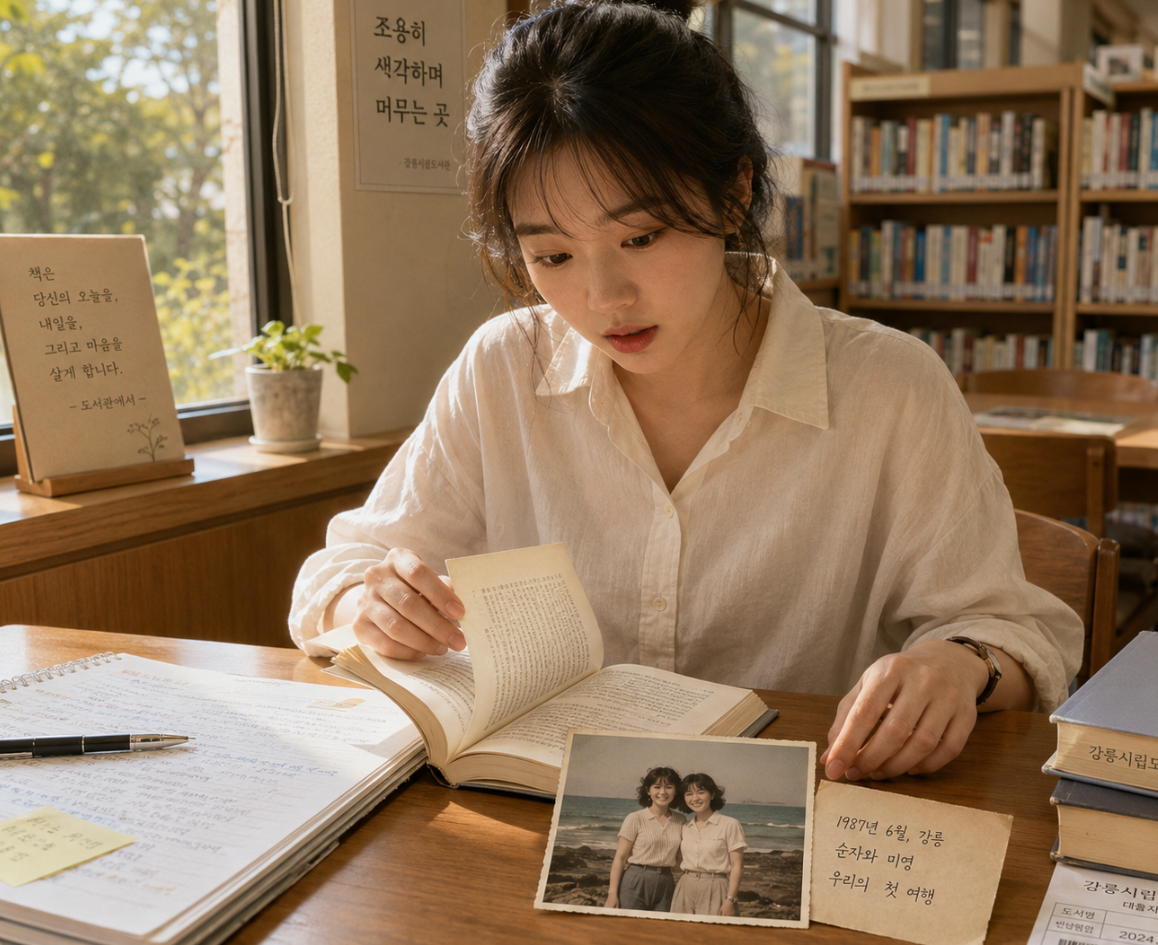
특히 3층 창가에는 햇빛이 잘 들어오는 자리가 있었다.

Created by AI

서연은 아침 9시에 도서관에 도착해 면접 예상 질문을 정리하고, 점심을 먹은 뒤에는 자기소개를 소리 내지 않고 연습했다.

어느 화요일 오후, 서연은 오랫동안 컴퓨터 화면을 봐서 눈이 피곤해졌다.

“잠깐 쉬어야겠다.”

서연은 자리에서 일어나 2층 문학 자료실로 내려갔다.

책장 사이를 천천히 걷다 보니 오래된 한국 소설 한 권이 눈에 들어왔다.

책 제목은 《바닷가의 작은 집》이었다.

표지는 조금 낡았고 책등의 글자도 색이 바래 있었다. 하지만 제목이 따뜻하게 느껴졌다.

서연은 책을 꺼내 첫 페이지를 펼쳤다.

이야기는 서울을 떠나 바닷가 마을에서 새로운 삶을 시작한 한 여성에 관한 내용이었다.

서연은 몇 페이지를 읽다가 책을 빌리기로 했다.

대출 기계에 회원증을 대고 책을 올려놓자 화면에 반납 날짜가 나타났다.

대출일: 5월 12일
반납 예정일: 5월 26일

서연은 책을 가방에 넣고 다시 공부하러 올라갔다.

그날 저녁, 집에 돌아온 서연은 간단하게 저녁을 먹었다.

샤워를 마친 뒤 침대에 앉아 도서관에서 빌린 소설을 꺼냈다.

책을 읽기 시작한 지 30분쯤 지났을 때였다.

페이지를 넘기던 서연의 손 아래로 작은 종이 한 장이 떨어졌다.

“이게 뭐지?”

서연은 바닥에 떨어진 종이를 주웠다.

그것은 종이가 아니라 오래된 사진이었다.

사진 속에는 젊은 여성 두 명이 바닷가에서 나란히 서 있었다.

두 사람은 비슷한 모자를 쓰고 있었고, 한 사람은 꽃무늬 원피스를 입고 있었다. 다른 사람은 흰 셔츠와 청바지를 입고 있었다.

사진 뒤에는 파란색 볼펜으로 짧은 글이 적혀 있었다.

1987년 6월, 강릉
순자와 미영
우리의 첫 여행

서연은 사진을 한참 바라보았다.

사진의 색은 조금 누렇게 변했지만 두 사람의 웃는 얼굴은 선명했다.

“누가 책갈피로 사용했나 봐.”

서연은 사진을 잃어버린 사람이 걱정할지도 모른다고 생각했다.

중요한 사진이라면 반드시 찾아 주어야 했다.

하지만 이미 밤 10시가 넘었기 때문에 도서관은 문을 닫은 상태였다.

서연은 사진이 구겨지지 않도록 투명한 파일 안에 넣어 놓았다.

그리고 휴대전화 메모장에 적었다.

내일 도서관에 사진 가져가기

다음 날 아침, 서연은 도서관에 도착하자마자 1층 안내 데스크로 갔다.

안내 데스크에는 중년의 여성 사서가 앉아 있었다.

“안녕하세요. 어제 빌린 책에서 사진을 발견했는데요.”

서연은 투명 파일에서 사진을 꺼냈다.

사서는 사진의 앞뒤를 조심스럽게 확인했다.

“책 사이에 들어 있었어요?”

“네. 어젯밤에 읽다가 발견했어요.”

“소중한 사진처럼 보이네요.”

“혹시 이 책을 전에 빌린 사람에게 연락할 수 있을까요?”

사서는 잠시 생각한 뒤 고개를 저었다.

“개인정보 때문에 이전 대출자의 연락처를 알려 드리거나 바로 연락하기는 어려워요.”

“그러면 사진 주인을 찾을 방법이 없을까요?”

“분실물로 보관해 놓을 수는 있어요. 그리고 책을 반납한 분이 다시 찾아오실 수도 있습니다.”

사서는 작은 분실물 봉투를 가져왔다.

봉투 앞면에 날짜와 발견 장소를 적었다.

발견 날짜: 5월 13일
발견 장소: 도서관 소설책 안
물품: 오래된 사진 1장

서연은 조금 걱정스러운 표정으로 물었다.

“주인이 사진을 잃어버린 사실을 모르고 있으면 어떡하죠?”

“도서관 게시판에 안내문을 붙여 놓을게요. 사진 속 얼굴이나 이름은 자세히 공개하지 않고, 오래된 사진을 보관 중이라고만 적겠습니다.”

“그럼 제가 발견한 책 제목도 적어 주세요.”

“네. 그렇게 할게요.”

사서는 컴퓨터로 짧은 안내문을 작성해 출력했다.

분실물을 보관하고 있습니다.
문학 자료실의 대출 도서에서 오래된 사진이 발견되었습니다.
본인의 물건이라고 생각되면 1층 안내 데스크로 문의해 주세요.

서연은 안내문이 게시판에 붙는 것을 확인한 뒤 3층으로 올라갔다.

면접 준비를 시작했지만 사진 속 두 사람의 웃는 얼굴이 계속 생각났다.

사진의 주인은 지금 몇 살일까?

사진 속 두 여성은 아직도 서로 연락하고 있을까?

‘우리의 첫 여행’이라고 쓸 만큼 특별한 사이였을지도 몰랐다.

서연은 점심을 먹으면서 친구 유진에게 사진 이야기를 메시지로 보냈다.

도서관 책에서 1987년에 찍은 사진을 발견했어.
주인을 찾을 수 있을까?

유진이 곧 답장했다.

도서관에서 보관하면 찾으러 오지 않을까?
인터넷에 올리는 건 조심해야 해. 얼굴과 이름이 있으니까.

서연도 같은 생각이었다.

사진을 온라인에 공개하면 주인을 더 빨리 찾을 수도 있었다. 하지만 다른 사람의 얼굴과 이름을 허락 없이 올리는 것은 좋지 않았다.

서연은 도서관에 맡긴 것이 가장 안전하다고 생각했다.

며칠이 지났다.

서연은 매일 도서관에 갔지만 안내 데스크에 사진을 찾으러 온 사람은 없었다.

금요일 오후, 서연은 사서에게 물었다.

“혹시 그 사진 주인이 왔나요?”

“아직 아무도 오지 않았어요.”

“주인이 책 안에 사진을 넣었다는 걸 잊어버렸을지도 모르겠네요.”

“그럴 수도 있죠. 오래된 사진을 책갈피처럼 사용하다가 그대로 반납하는 분들이 가끔 있어요.”

“사진은 얼마나 오래 보관하나요?”

“보통 분실물은 일정 기간 동안 보관합니다. 하지만 이런 개인적인 물건은 가능한 한 오래 보관하려고 해요.”

서연은 안심하면서도 조금 아쉬웠다.

주인을 직접 만나 사진을 돌려주고 싶었기 때문이다.

그다음 주 월요일, 도서관에는 평소보다 사람이 많았다.

근처 고등학교의 시험 기간이 시작되어 학생들이 일찍부터 자리를 잡고 있었다.

서연은 겨우 3층 구석 자리를 찾아 앉았다.

두 시간 정도 공부한 뒤 물을 마시러 1층으로 내려갔다.

그때 안내 데스크 앞에 서 있는 한 할머니가 보였다.

할머니는 작은 천 가방을 들고 있었고, 회색 머리를 단정하게 묶고 있었다.

그녀는 사서에게 무언가를 설명하고 있었다.

“책 제목이 정확히 생각나지 않아요. 바다와 집이 들어간 제목이었는데…….”

서연은 걸음을 멈췄다.

사서가 물었다.

“혹시 《바닷가의 작은 집》인가요?”

할머니의 얼굴이 밝아졌다.

“맞아요. 그 책이에요.”

서연은 가슴이 조금 빨리 뛰기 시작했다.

할머니가 찾는 것이 사진일지도 모른다는 생각이 들었다.

사서가 다시 물었다.

“책 안에 두고 온 물건이 있으신가요?”

“네. 오래된 사진 한 장이에요. 젊었을 때 친구하고 강릉에 가서 찍은 사진이에요.”

서연은 자신도 모르게 안내 데스크 가까이 다가갔다.

사서는 서연을 알아보고 미소를 지었다.

“마침 사진을 발견한 분이 여기 계시네요.”

할머니가 서연을 바라보았다.

“사진을 발견하셨어요?”

“네. 지난주에 그 책을 빌렸는데 페이지 사이에서 떨어졌어요.”

할머니는 두 손을 모으며 말했다.

“정말 다행이에요. 며칠 동안 얼마나 찾았는지 몰라요.”

사서는 분실물 보관함에서 봉투를 꺼냈다.

하지만 바로 사진을 건네지는 않았다.

“확인을 위해 사진 뒤에 적힌 내용을 말씀해 주시겠어요?”

할머니는 잠시 생각한 뒤 대답했다.

“1987년 6월, 강릉. 순자와 미영. 우리의 첫 여행이라고 적혀 있을 거예요.”

사서는 봉투를 열어 사진을 확인했다.

“네. 맞습니다.”

사서가 사진을 건네자 할머니는 두 손으로 조심스럽게 받았다.

사진을 보는 순간 할머니의 눈이 조금 붉어졌다.

“다시는 못 찾을 줄 알았어요.”

서연은 조용히 물었다.

“정말 중요한 사진인가 봐요.”

할머니는 고개를 끄덕였다.

“사진 속 꽃무늬 원피스를 입은 사람이 저예요. 옆에 있는 사람은 제 친구 미영이고요.”

사진 속 두 사람은 스무 살 정도로 보였다.

서연은 지금의 할머니와 사진 속 젊은 여성을 번갈아 보았다.

눈과 웃는 모습이 닮아 있었다.

“친구분하고 처음 여행 갔을 때 찍은 사진이라고 적혀 있었어요.”

“맞아요. 그때 우리는 스물두 살이었어요.”

할머니는 사진을 손가락으로 가리켰다.

“둘 다 작은 봉제 공장에서 일했어요. 월급이 많지 않았지만 매달 조금씩 돈을 모았죠.”

“여행을 가려고요?”

“네. 바다를 한 번도 본 적이 없었거든요.”

서연은 놀랐다.

“그때까지 바다를 못 보셨어요?”

“우리 둘 다 충청도 시골에서 태어나 서울로 올라왔어요. 일만 하느라 여행할 시간이 없었죠.”

두 사람은 1년 동안 돈을 모아 강릉으로 첫 여행을 갔다.

새벽 기차를 타고 도착한 뒤 바다를 보자 너무 기뻐서 한참 동안 소리를 질렀다고 했다.

사진은 바닷가 근처의 작은 사진관 주인이 찍어 주었다.

그 시절에는 휴대전화가 없었기 때문에 여행 사진 한 장도 귀했다.

“그런데 왜 이 사진을 책 안에 넣으셨어요?”

서연이 물었다.

할머니는 조금 부끄러운 듯 웃었다.

“지난주에 손녀에게 옛날 이야기를 해 주다가 사진을 보여 줬어요. 그날 도서관에 갈 때 가방 안에 사진을 넣어 두었죠.”

할머니는 《바닷가의 작은 집》을 빌려 집에서 읽었다.

책 속 주인공이 처음 바다를 보는 장면에서 자신의 젊은 시절이 생각났다.

그래서 사진을 책 사이에 끼워 놓고 한참 바라보았다.

“사진을 책갈피로 쓰신 거예요?”

“잠깐만 넣어 놓는다는 게 잊어버리고 책을 반납해 버렸어요.”

집에 돌아간 뒤 며칠이 지나 손녀가 사진을 다시 보여 달라고 했다.

그제야 사진이 없다는 것을 알게 되었다.

할머니는 서랍, 가방, 옷장 안까지 모두 찾아보았다.

“책 안에 넣었다는 건 언제 생각나셨어요?”

“어제 밤에 갑자기 생각났어요. 그런데 책 제목이 정확히 기억나지 않아서 오늘 도서관에 왔죠.”

“조금만 늦었으면 못 찾았을지도 모르겠네요.”

“그래도 이렇게 잘 보관해 주셨잖아요.”

할머니는 서연에게 여러 번 고개를 숙였다.

“정말 고마워요.”

“제가 한 일은 도서관에 맡긴 것뿐이에요.”

“그것도 큰 일이죠. 그냥 버리거나 가지고 갈 수도 있었잖아요.”

서연은 사진을 처음 발견한 날을 떠올렸다.

오래된 사진이었지만 누군가에게는 무엇과도 바꿀 수 없는 물건일 거라고 생각했다.

“친구분은 지금도 만나세요?”

서연이 물었다.

할머니의 미소가 조금 작아졌다.

“미영이는 지금 대전에 살아요. 예전에는 자주 만났는데 요즘은 서로 다리가 불편해서 자주 못 봐요.”

“전화는 자주 하세요?”

“일주일에 한 번은 해요. 그런데 작년부터 미영이의 기억력이 조금 나빠졌어요.”

미영은 같은 이야기를 여러 번 하거나 약속을 잊기도 했다.

그래도 강릉 여행 이야기를 하면 바다 냄새와 기차 안에서 먹었던 삶은 달걀까지 자세히 기억한다고 했다.

“오래된 기억은 아직 아주 선명한가 봐요.”

“네. 그래서 이 사진을 잃어버린 게 더 속상했어요.”

할머니는 다음 달에 딸과 함께 대전에 가서 미영을 만날 예정이었다.

그때 이 사진을 가져가 보여 줄 생각이었다.

“사진을 새로 인화해 두는 게 좋겠어요.”

서연이 말했다.

“인화요?”

“휴대전화로 사진을 찍어 두고 사진관에서 여러 장 출력할 수 있어요. 원본은 안전하게 보관하고 복사한 사진을 친구분께 드리면 어떨까요?”

할머니는 좋은 생각이라는 듯 고개를 끄덕였다.

“그런데 내가 휴대전화로 사진을 잘 찍지 못해요.”

“제가 도와드릴까요?”

“그래도 돼요?”

서연은 안내 데스크 옆에 있는 밝은 탁자로 사진을 가져갔다.

사진이 구겨지지 않도록 평평하게 놓은 뒤 휴대전화 카메라로 앞면과 뒷면을 찍었다.

빛이 반사되어 처음 사진은 흐리게 나왔다.

서연은 창가로 자리를 옮겨 다시 찍었다.

이번에는 사진 속 두 여성의 얼굴과 뒤에 적힌 글씨가 선명하게 보였다.

“잘 나온 것 같아요.”

서연은 화면을 확대해 할머니에게 보여 주었다.

“어머, 원래 사진보다 더 크게 볼 수 있네요.”

“이 파일을 가족에게 보내 놓으면 잃어버릴 걱정이 줄어들어요.”

할머니는 딸의 전화번호를 찾아 서연에게 보여 주었다.

서연은 사진 파일을 할머니의 딸에게 메시지로 보냈다.

잠시 후 답장이 왔다.

엄마, 이 사진 찾았어요? 정말 다행이에요!
집에 오면 제가 여러 장 인화해 드릴게요.

할머니는 메시지를 읽고 안심한 표정을 지었다.

“딸이 항상 중요한 사진은 휴대전화에 저장해 놓으라고 했는데, 내가 자꾸 미뤘어요.”

“이제는 안전하게 보관할 수 있겠네요.”

할머니는 사진을 작은 지갑 안쪽에 조심스럽게 넣었다.

“오늘 시간 괜찮으면 차 한 잔 사도 될까요?”

“괜찮아요. 그러지 않으셔도 돼요.”

“고마운 사람에게 차 한 잔도 못 사면 마음이 불편하잖아요.”

서연은 잠시 고민하다가 고개를 끄덕였다.

“그럼 도서관 카페에서 잠깐 마셔요.”

도서관 1층에는 작은 카페가 있었다.

할머니는 따뜻한 유자차를 주문했고 서연은 아이스 아메리카노를 주문했다.

두 사람은 창가 자리에 마주 앉았다.

할머니의 이름은 오순자였다.

순자는 서연에게 요즘 도서관에 자주 오는지 물었다.

“네. 취업 면접을 준비하고 있어요.”

“어떤 회사에 지원했어요?”

“출판 회사에 지원했어요. 책을 소개하고 홍보하는 일을 하고 싶어요.”

“책을 좋아하나 봐요.”

“어릴 때부터 좋아했어요. 그런데 면접만 생각하면 긴장돼요.”

순자는 유자차를 천천히 저었다.

“처음 서울에 올라왔을 때 나도 매일 긴장했어요.”

순자는 열아홉 살에 혼자 서울로 올라왔다.

기차역에서 공장까지 가는 버스를 잘못 타서 낯선 동네에 내린 적도 있었다.

길을 묻고 싶었지만 부끄러워서 한참 동안 혼자 걸었다.

“그때 미영이가 먼저 말을 걸어 줬어요.”

미영은 순자와 같은 날 공장에 들어온 신입 직원이었다.

두 사람은 기숙사 같은 방을 사용했고, 처음 받은 월급으로 서로에게 작은 손수건을 선물했다.

“처음에는 미영이가 말이 너무 많아서 피곤하다고 생각했어요.”

순자가 웃으며 말했다.

“그런데 같이 일하다 보니 내가 힘들 때 가장 먼저 알아보는 사람이 미영이더라고요.”

“그래서 함께 여행도 가신 거군요.”

“맞아요. 사람은 처음 봤을 때와 오래 알고 난 뒤가 많이 달라요.”

순자는 서연에게 면접도 비슷하다고 말했다.

처음 만나는 사람들 앞에서는 누구나 긴장하지만, 자신이 준비한 것을 솔직하게 보여 주면 된다는 것이었다.

“완벽한 대답을 하려고 하면 더 떨려요.”

“제가 자꾸 외운 문장을 그대로 말하려고 해서 더 긴장하는 것 같아요.”

“외운 말보다 왜 그 일을 하고 싶은지 이야기해 봐요.”

서연은 고개를 끄덕였다.

순자는 가방에서 작은 천 조각 하나를 꺼냈다.

연한 파란색 천으로 만든 책갈피였다.

끝에는 작은 꽃 모양 자수가 놓여 있었다.

“이건 제가 만든 거예요.”

“직접 만드셨어요?”

“집에서 심심할 때 책갈피를 만들어요. 도서관에 자주 오는 사람들에게 가끔 나누어 주기도 하고요.”

순자는 책갈피를 서연에게 건넸다.

“사진을 찾아 준 선물이에요.”

“정말 받아도 돼요?”

“그럼요. 사진 대신 이걸 책 사이에 넣어야겠어요.”

두 사람은 동시에 웃었다.

서연은 파란색 책갈피를 손으로 만져 보았다.

천은 부드러웠고 자수는 작지만 정성스럽게 놓여 있었다.

“소중하게 사용할게요.”

“중요한 건 책 안에 두고 반납하지 말고요.”

“꼭 확인할게요.”

차를 다 마신 뒤 순자는 서연의 연락처를 물었다.

“나중에 미영이를 만나면 사진을 보여 준 이야기를 알려 주고 싶어요.”

서연은 자신의 번호를 순자의 휴대전화에 저장해 주었다.

이름은 도서관 서연 씨라고 적었다.

순자는 자리에서 일어나며 말했다.

“면접도 잘 보고 결과 알려 줘요.”

“네. 꼭 연락드릴게요.”

서연은 다시 3층 공부 자리로 올라갔다.

가방에서 《바닷가의 작은 집》을 꺼내 순자가 준 책갈피를 끼워 놓았다.

책을 펼치자 전날까지 평범하게 느껴졌던 문장들이 조금 다르게 보였다.

같은 책을 읽더라도 사람마다 떠올리는 기억은 달랐다.

누군가는 바다를 떠올렸고, 누군가는 친구를 떠올렸고, 누군가는 아직 만나지 못한 자신의 미래를 생각했다.

서연은 면접 노트를 꺼냈다.

첫 페이지에는 예상 질문이 적혀 있었다.

왜 출판 회사에서 일하고 싶습니까?

서연은 이전에 외워 놓은 대답을 지웠다.

그리고 자신이 정말 하고 싶은 말을 새로 적었다.

책은 서로 모르는 사람들의 기억과 마음을 연결해 준다고 생각합니다.
저는 좋은 이야기가 필요한 사람에게 제대로 전달되도록 돕고 싶습니다.

그날부터 서연은 외운 문장을 반복하는 대신 자신의 경험을 이야기하는 연습을 했다.

도서관에서 사진을 발견한 일도 면접 사례로 정리했다.

개인정보를 공개하지 않고 도서관에 분실물을 맡긴 판단, 사서와 함께 주인을 찾은 과정, 그리고 사진을 디지털 파일로 보관하도록 도운 일을 적었다.

준비를 계속하다 보니 면접에 대한 두려움도 조금씩 줄어들었다.

시간은 빠르게 지나갔다.

면접 당일 아침, 서연은 평소보다 일찍 일어났다.

흰 셔츠와 검은색 재킷을 입고 거울 앞에 섰다.

가방 안에는 이력서와 포트폴리오, 작은 물병이 들어 있었다.

서연은 마지막으로 도서관에서 빌린 책을 바라보았다.

책 사이에는 파란색 책갈피가 끼워져 있었다.

서연은 책갈피를 꺼내 면접 노트 사이에 넣었다.

“잘할 수 있어.”

회사에 도착하자 대기실에는 지원자 다섯 명이 앉아 있었다.

서연은 긴장했지만 순자가 했던 말을 떠올렸다.

완벽한 대답보다 왜 그 일을 하고 싶은지 이야기해 봐요.

면접관은 여러 질문을 했다.

“최근 인상 깊게 읽은 책이 있습니까?”

“어려운 상황에서 문제를 해결한 경험이 있습니까?”

서연은 사진을 발견했던 일을 설명했다.

다른 사람의 물건이기 때문에 온라인에 바로 공개하지 않았고, 도서관의 절차에 따라 보관했다는 점도 말했다.

면접관 한 명이 물었다.

“사진 주인을 찾은 뒤에는 어떤 생각이 들었나요?”

서연은 잠시 생각한 뒤 대답했다.

“작은 사진 한 장도 누군가의 삶에서는 아주 큰 이야기일 수 있다는 것을 알게 되었습니다. 책도 비슷하다고 생각합니다. 한 사람에게는 평범한 문장이 다른 사람에게는 오래된 기억이나 새로운 용기가 될 수 있습니다.”

면접관은 고개를 끄덕였다.

면접을 마치고 건물 밖으로 나오자 다리에 힘이 풀리는 느낌이 들었다.

완벽하게 대답하지 못한 질문도 있었다.

하지만 준비한 문장을 그대로 외우지 않고 자신의 생각을 이야기했다는 점은 만족스러웠다.

서연은 순자에게 메시지를 보냈다.

오늘 면접을 봤어요.
많이 긴장했지만 제 이야기를 솔직하게 했어요.
책갈피도 가지고 갔습니다.

한 시간 뒤 순자에게 답장이 왔다.

잘했어요.
결과가 어떻게 나오든 오늘 한 걸음 앞으로 간 거예요.
나는 이번 주말에 미영이를 만나러 가요.

메시지 아래에는 새로 인화한 사진이 함께 첨부되어 있었다.

원본보다 조금 밝고 선명하게 보정된 사진이었다.

똑같은 사진이 두 장 인화되어 나란히 놓여 있었다.

하나는 순자가 보관하고, 다른 하나는 미영에게 줄 예정이라고 했다.

며칠 뒤 토요일 오후, 순자는 다시 메시지를 보냈다.

미영이에게 사진을 보여 줬어요.
처음에는 오래 바라보기만 했어요.
그러다가 강릉에서 먹은 삶은 달걀이 너무 짰다고 웃었어요.

메시지와 함께 두 할머니가 사진을 들고 웃는 모습도 보내왔다.

서연은 화면을 보며 미소를 지었다.

사진 속 젊은 두 여성과 지금의 두 할머니는 많이 달라 보였다.

하지만 눈을 바라보며 웃는 모습은 여전히 같았다.

그다음 주 월요일, 서연은 도서관에서 빌린 책을 반납했다.

반납하기 전에 페이지를 천천히 넘기며 안에 개인 물건이 남아 있지 않은지 확인했다.

안내 데스크의 사서가 웃으며 말했다.

“이번에는 책갈피를 두고 오지 않으셨네요.”

“네. 중요한 책갈피라서 먼저 꺼냈어요.”

“사진 주인분이 다녀간 뒤 계속 고맙다고 말씀하셨어요.”

“저도 좋은 이야기를 들을 수 있어서 감사했어요.”

서연은 새 책을 빌리기 위해 2층으로 올라갔다.

이번에는 면접과 관련 없는 여행 에세이를 골랐다.

대출을 마친 뒤 휴대전화가 울렸다.

출판 회사에서 온 이메일이었다.

서연은 긴장한 손으로 메시지를 열었다.

김서연 님, 최종 면접 합격을 축하드립니다.
입사 일정과 관련하여 별도로 안내드리겠습니다.

서연은 몇 번이나 문장을 다시 읽었다.

그리고 가장 먼저 순자에게 전화를 걸었다.

“여보세요?”

“순자 할머니, 저 합격했어요.”

전화기 너머에서 순자의 기쁜 목소리가 들렸다.

“정말 잘됐네요! 내가 합격할 줄 알았어요.”

“할머니가 해 주신 말 덕분에 솔직하게 이야기할 수 있었어요.”

“아니에요. 원래 서연 씨 안에 있던 이야기를 꺼낸 것뿐이죠.”

서연은 창가에 서서 도서관 밖을 바라보았다.

햇빛 아래 사람들이 천천히 길을 걷고 있었다.

가방 안에는 새로 빌린 책과 파란색 책갈피가 들어 있었다.

책 속에서 우연히 떨어진 오래된 사진 한 장은 주인에게 돌아갔다.

그리고 그 사진을 발견한 서연도 자신이 가고 싶었던 곳으로 한 걸음 나아가게 되었다.


Natural English Translation

The Photograph Between the Pages

Seoyeon was scheduled to attend an important job interview the following month.

After graduating from university, she applied to several companies but had not yet received a good result. When she prepared for interviews alone at home, she kept checking her phone or felt like lying down on her bed.

For that reason, Seoyeon decided to visit the public library near her home every weekday.

The library was about a 15-minute walk from her house. The building was slightly old, but it had many books and was quiet enough for studying.

There was a particularly good seat beside a window on the third floor.

Seoyeon arrived at the library at nine in the morning, organized possible interview questions, and practiced introducing herself silently after lunch.

One Tuesday afternoon, her eyes became tired from looking at the computer screen for too long.

“I should take a short break.”

Seoyeon stood up and went down to the literature room on the second floor.

As she slowly walked between the shelves, an old Korean novel caught her attention.

Its title was The Little House by the Sea.

The cover was slightly worn, and the letters on the spine had faded. However, the title felt warm.

Seoyeon took the book from the shelf and opened the first page.

The story was about a woman who left Seoul and began a new life in a seaside village.

After reading a few pages, Seoyeon decided to borrow it.

She placed her library card against the checkout machine and put the book on it. The due date appeared on the screen.

Borrowed: May 12
Due: May 26

Seoyeon put the book in her bag and returned upstairs to study.

That evening, she returned home and ate a simple dinner.

After showering, she sat on her bed and took out the novel from the library.

She had been reading for about 30 minutes when a small piece of paper fell from beneath her hand as she turned a page.

“What is this?”

Seoyeon picked it up from the floor.

It was not a piece of paper but an old photograph.

Two young women stood beside each other at the beach.

They wore similar hats. One woman wore a flower-patterned dress, while the other wore a white shirt and jeans.

A short message had been written on the back in blue ink.

June 1987, Gangneung
Sunja and Miyeong
Our first trip

Seoyeon looked at the photograph for a long time.

Its colors had become slightly yellow, but the women’s smiling faces were still clear.

“Someone must have used it as a bookmark.”

She thought that the person who lost the photograph might be worried.

If it was important, she needed to return it.

However, it was already past ten at night, so the library was closed.

Seoyeon placed the photograph inside a clear file so that it would not be damaged.

She also wrote a reminder in her phone.

Take the photograph to the library tomorrow

The next morning, Seoyeon went to the information desk as soon as she arrived.

A middle-aged female librarian was sitting there.

“Hello. I found this photograph inside a book I borrowed yesterday.”

Seoyeon took it out of the clear file.

The librarian carefully checked the front and back.

“It was inside the book?”

“Yes. It fell out while I was reading last night.”

“It looks like an important photograph.”

“Can you contact the person who borrowed this book before me?”

The librarian thought for a moment and shook her head.

“Because of privacy rules, we cannot give you the previous borrower’s contact information or directly contact them without a proper reason.”

“Then is there no way to find the owner?”

“We can keep it as a lost item. The person who returned the book may also come back looking for it.”

The librarian brought out a small lost-property envelope.

She wrote the date and place where the photograph had been found.

Date found: May 13
Location: Inside a library novel
Item: One old photograph

Seoyeon asked with a worried expression, “What if the owner doesn’t know that the photograph is missing?”

“I’ll put a notice on the library board. We won’t publicly show the names or faces. We’ll only say that an old photograph is being stored here.”

“Please include the title of the book where it was found.”

“Yes. I’ll do that.”

The librarian prepared and printed a short notice.

A lost item is being held.
An old photograph was found inside a borrowed book from the literature room.
Please contact the first-floor information desk if you believe it belongs to you.

After confirming that the notice had been posted, Seoyeon went upstairs.

She started preparing for her interview, but the two smiling faces in the photograph kept returning to her mind.

How old was the owner now?

Were the two women still in contact?

They might have had a very special relationship if someone had written “our first trip” on the back.

While eating lunch, Seoyeon sent a message to her friend Yujin.

I found a photograph taken in 1987 inside a library book.
Do you think we can find the owner?

Yujin replied soon afterward.

The owner may return if the library keeps it.
Be careful about posting it online because it includes faces and names.

Seoyeon agreed.

Posting it online might help find the owner faster, but uploading another person’s face and name without permission would not be appropriate.

She believed leaving it with the library was the safest choice.

Several days passed.

Seoyeon went to the library each day, but no one visited the desk to claim the photograph.

On Friday afternoon, she asked the librarian about it.

“Has the owner come?”

“No one has come yet.”

“Maybe the person forgot they placed it inside the book.”

“That is possible. People occasionally use old photographs as bookmarks and return them inside books.”

“How long will the library keep it?”

“We generally keep lost property for a fixed period, but we try to keep personal items such as this for as long as possible.”

Seoyeon felt relieved but also slightly disappointed.

She had wanted to meet the owner and return the photograph personally.

The following Monday, the library was busier than usual.

The examination period had begun at a nearby high school, so students had taken many of the seats early in the morning.

Seoyeon managed to find a seat in a corner of the third floor.

After studying for about two hours, she went downstairs to drink some water.

At that moment, she noticed an elderly woman standing in front of the information desk.

The woman carried a small cloth bag and had neatly tied gray hair.

She was explaining something to the librarian.

“I can’t remember the exact title. It had something about the sea and a house in it.”

Seoyeon stopped walking.

The librarian asked, “Was it The Little House by the Sea?”

The elderly woman’s face brightened.

“Yes. That was the book.”

Seoyeon felt her heart beat slightly faster.

She thought the woman might be searching for the photograph.

The librarian asked another question.

“Did you leave something inside the book?”

“Yes. It was an old photograph. I took it in Gangneung with a friend when we were young.”

Without realizing it, Seoyeon stepped closer to the desk.

The librarian recognized her and smiled.

“The person who found your photograph happens to be here.”

The elderly woman looked at Seoyeon.

“You found it?”

“Yes. I borrowed the book last week, and it fell from between the pages.”

The woman joined her hands together.

“What a relief. I have been searching for it for several days.”

The librarian took the envelope from the lost-property cabinet.

However, she did not immediately give the photograph to the woman.

“To confirm ownership, could you tell me what was written on the back?”

The woman thought for a moment.

“It should say, ‘June 1987, Gangneung. Sunja and Miyeong. Our first trip.’”

The librarian opened the envelope.

“Yes. That is correct.”

When the librarian handed it to her, the woman carefully accepted it with both hands.

Her eyes became slightly red as soon as she saw it.

“I thought I would never find it again.”

Seoyeon quietly asked, “It must be very important to you.”

The woman nodded.

“I’m the person wearing the flower-patterned dress. The person beside me is my friend Miyeong.”

The two women in the photograph looked about 20 years old.

Seoyeon looked from the young woman in the picture to the elderly woman standing before her.

Their eyes and smiles were similar.

“It said the photograph was taken during your first trip.”

“That’s right. We were 22 years old.”

The woman pointed to the photograph.

“We both worked at a small clothing factory. We didn’t earn much, but we saved a little money every month.”

“To travel?”

“Yes. Neither of us had ever seen the sea.”

Seoyeon was surprised.

“You had never seen the sea until then?”

“We were both born in rural Chungcheong Province and moved to Seoul. We were always working, so we had no time to travel.”

The two friends saved money for one year and went to Gangneung.

They took an early train, and when they finally saw the sea, they were so happy that they shouted for a long time.

The photograph was taken by the owner of a small photo studio near the beach.

Because there were no mobile phones in those days, even one travel photograph was precious.

“Why did you put it inside the book?”

Seoyeon asked.

The woman laughed slightly shyly.

“I was telling my granddaughter stories about the past and showed her the photograph. I put it in my bag when I went to the library that day.”

She borrowed The Little House by the Sea and read it at home.

When the character in the novel saw the sea for the first time, the woman remembered her youth.

She put the photograph between the pages and looked at it for a long time.

“Did you use it as a bookmark?”

“I only meant to leave it there for a moment, but I forgot and returned the book.”

Several days after returning it, her granddaughter asked to see the photograph again.

Only then did she realize it was missing.

She searched through drawers, bags, and wardrobes.

“When did you remember putting it inside the book?”

“It suddenly came to me last night. But I couldn’t remember the exact title, so I came here today.”

“You might not have found it if you had come much later.”

“But you and the library kept it safely.”

The elderly woman bowed to Seoyeon several times.

“Thank you very much.”

“I only gave it to the library.”

“That was still important. You could have thrown it away or kept it.”

Seoyeon remembered the evening when she first found the photograph.

Although it was old, she had believed it might be priceless to someone.

“Do you still meet your friend?”

Seoyeon asked.

The woman’s smile became slightly smaller.

“Miyeong lives in Daejeon. We met often in the past, but now our legs are uncomfortable, so we cannot meet as much.”

“Do you speak on the phone?”

“At least once a week. However, her memory has become slightly worse since last year.”

Miyeong sometimes repeated the same story or forgot appointments.

However, when they talked about the Gangneung trip, she still remembered the smell of the sea and even the boiled eggs they ate on the train.

“Her older memories must still be very clear.”

“Yes. That’s why I was so upset when I lost this photograph.”

The woman planned to visit Miyeong with her daughter the following month.

She wanted to take the photograph and show it to her friend.

“You should make copies,” Seoyeon suggested.

“Copies?”

“You can take a picture of it with a phone and print several copies at a photo shop. You could keep the original in a safe place and give a copy to your friend.”

“That sounds like a good idea, but I’m not good at taking photographs with my phone.”

“Would you like me to help?”

“Would that be all right?”

Seoyeon took the photograph to a bright table beside the information desk.

She placed it flat and photographed the front and back.

Light reflected from the surface, so the first image was unclear.

She moved to a window and tried again.

This time, the women’s faces and the writing on the back were clear.

“I think this one came out well.”

Seoyeon enlarged the picture and showed it to the woman.

“Oh, I can see it even larger than the original.”

“If you send the file to your family, you won’t have to worry as much about losing it.”

The woman found her daughter’s phone number.

Seoyeon sent the files to her.

A reply arrived soon afterward.

Mom, did you find this photograph? What a relief!
When you come home, I’ll print several copies for you.

The woman looked relieved after reading it.

“My daughter always told me to save important photographs on my phone, but I kept putting it off.”

“Now you can store it safely.”

The woman carefully placed the photograph inside her wallet.

“Do you have time for a cup of tea?”

“That’s all right. You don’t need to buy me anything.”

“I would feel uncomfortable if I couldn’t even buy tea for someone who helped me.”

Seoyeon thought for a moment and nodded.

“Then let’s have something at the library café.”

There was a small café on the first floor.

The woman ordered hot citron tea, and Seoyeon ordered an iced Americano.

They sat across from each other beside the window.

The woman’s name was Oh Sunja.

Sunja asked whether Seoyeon often visited the library.

“Yes. I’m preparing for a job interview.”

“What kind of company did you apply to?”

“A publishing company. I would like to introduce and promote books.”

“You must like books.”

“I have liked them since I was young, but I become nervous whenever I think about the interview.”

Sunja slowly stirred her citron tea.

“I was nervous every day when I first moved to Seoul.”

Sunja had moved to Seoul alone at the age of 19.

Once, she took the wrong bus from the train station and got off in an unfamiliar neighborhood.

She wanted to ask for directions but felt too shy, so she walked alone for a long time.

“That was when Miyeong spoke to me first.”

Miyeong had joined the factory on the same day.

They shared a dormitory room and used their first salaries to buy each other small handkerchiefs.

“At first, I thought Miyeong talked too much and was tiring.”

Sunja laughed.

“But as we kept working together, I realized she was the first person to notice whenever I was struggling.”

“That is why you traveled together.”

“That’s right. People can seem very different when you first meet them and after you have known them for a long time.”

Sunja said an interview was similar.

Everyone became nervous in front of people they had never met, but Seoyeon only needed to honestly show what she had prepared.

“You become more nervous when you try to give a perfect answer.”

“I think I’m nervous because I’m trying to repeat memorized sentences exactly.”

“Instead of memorized words, explain why you want to do the work.”

Seoyeon nodded.

Sunja took a small piece of cloth from her bag.

It was a bookmark made from light blue fabric.

A small flower had been embroidered at one end.

“I made this.”

“You made it yourself?”

“I make bookmarks when I have free time. Sometimes I give them to people who visit the library often.”

Sunja handed it to Seoyeon.

“This is a gift for finding the photograph.”

“May I really accept it?”

“Of course. I should put this inside my books instead of a photograph.”

They both laughed.

Seoyeon touched the blue bookmark.

The fabric was soft, and the embroidery was small but carefully made.

“I’ll treasure it.”

“Don’t leave it inside a library book when you return it.”

“I’ll make sure to check.”

After finishing their drinks, Sunja asked for Seoyeon’s contact information.

“I would like to tell you what happens when I show the photograph to Miyeong.”

Seoyeon saved her number in Sunja’s phone under the name Seoyeon from the library.

Sunja stood up and said, “Do well in your interview and tell me the result.”

“I will.”

Seoyeon returned to her study seat on the third floor.

She took The Little House by the Sea from her bag and placed the bookmark inside it.

When she opened the book, the sentences that had seemed ordinary before felt slightly different.

Even when people read the same book, each person remembered something different.

One person thought about the sea, another thought about a friend, and another thought about a future they had not yet reached.

Seoyeon opened her interview notebook.

A possible question was written on the first page.

Why do you want to work for a publishing company?

She erased the answer she had previously memorized.

Then she wrote what she truly wanted to say.

I believe books connect the memories and emotions of people who do not know each other.
I would like to help good stories reach the people who need them.

From that day, Seoyeon practiced talking about her own experiences instead of repeating memorized sentences.

She also organized the story about finding the photograph as an interview example.

She wrote about choosing not to post personal information online, leaving the item with the library, working with the librarian to find the owner, and helping preserve the photograph digitally.

As she continued preparing, her fear of the interview gradually became smaller.

Time passed quickly.

On the morning of the interview, Seoyeon woke earlier than usual.

She put on a white shirt and black jacket and stood in front of the mirror.

Her bag contained copies of her résumé, a portfolio, and a small bottle of water.

She looked once more at the book from the library.

The blue bookmark was between its pages.

Seoyeon removed it and placed it inside her interview notebook.

“I can do this.”

When she arrived at the company, five applicants were sitting in the waiting room.

Seoyeon was nervous, but she remembered Sunja’s words.

Instead of giving a perfect answer, explain why you want to do the work.

The interviewers asked several questions.

“What book have you read recently that impressed you?”

“Tell us about an experience in which you solved a difficult problem.”

Seoyeon explained how she found the photograph.

She also explained that she had not posted it online because it belonged to someone else and had followed the library’s lost-property procedure.

One interviewer asked, “What did you think after finding the owner?”

Seoyeon thought for a moment.

“I learned that even one small photograph can contain a very large story in someone’s life. I think books are similar. A sentence that seems ordinary to one person can give another person an old memory or new courage.”

The interviewer nodded.

When Seoyeon left the building, her legs felt weak.

There were questions she had not answered perfectly.

However, she was satisfied that she had spoken honestly rather than repeating memorized answers.

She sent a message to Sunja.

I had my interview today.
I was very nervous, but I spoke honestly about my own experience.
I also carried the bookmark with me.

Sunja replied one hour later.

You did well.
Whatever the result is, you took one step forward today.
I’m going to meet Miyeong this weekend.

A newly printed photograph was attached to the message.

It had been adjusted to look slightly brighter and clearer than the original.

Two identical copies were placed beside each other.

Sunja planned to keep one and give the other to Miyeong.

Several days later, on Saturday afternoon, Sunja sent another message.

I showed the photograph to Miyeong.
At first, she only looked at it for a long time.
Then she laughed and said that the boiled eggs we ate in Gangneung were too salty.

She also sent a photograph of the two elderly women smiling while holding the picture.

Seoyeon smiled at the screen.

The young women in the original photograph and the elderly women now looked very different.

However, the way they looked at each other and smiled was still the same.

The following Monday, Seoyeon returned the book.

Before returning it, she carefully turned through the pages to make sure no personal item remained inside.

The librarian at the information desk smiled.

“You didn’t leave your bookmark inside this time.”

“No. I took it out first because it is important.”

“The owner of the photograph continued to say how grateful she was.”

“I am also thankful because I heard such a meaningful story.”

Seoyeon went upstairs to choose a new book.

This time, she selected a travel essay unrelated to interview preparation.

After checking it out, her phone rang.

It was an email from the publishing company.

With nervous hands, Seoyeon opened it.

Ms. Kim Seoyeon, congratulations on passing the final interview.
We will contact you separately regarding your starting date.

Seoyeon read the message several times.

Then she immediately called Sunja.

“Hello?”

“Mrs. Sunja, I passed.”

Sunja’s delighted voice came through the phone.

“That is wonderful! I knew you would pass.”

“Thanks to what you told me, I was able to speak honestly.”

“No. I only helped you bring out the story that was already inside you.”

Seoyeon stood beside the window and looked outside the library.

People walked slowly beneath the sunlight.

Inside her bag were a newly borrowed book and the blue bookmark.

An old photograph that had accidentally fallen from a book had returned to its owner.

And Seoyeon, who had found the photograph, had also taken a step toward the place she wanted to reach.


Essential Vocabulary

KoreanRomanizationMeaning

구립도서관 gurip doseogwan district public library
자료실 jaryosil reference room; library room
책장 chaekjang bookshelf
책등 chaekdeung book spine
대출하다 daechulhada to borrow from a library
반납하다 bannaphada to return
반납 예정일 bannap yejeongil due date
책갈피 chaekgalpi bookmark
사진 sajin photograph
구겨지다 gugyeojida to become wrinkled
투명 파일 tumyeong pail clear file folder
안내 데스크 annae deseukeu information desk
사서 saseo librarian
개인정보 gaein jeongbo personal information
이전 대출자 ijeon daechulja previous borrower
분실물 bunsilmul lost property
보관하다 bogwanhada to keep; store
게시판 gesipan notice board
안내문 annaemun notice
주인 juin owner
인화하다 inhwahada to print a photograph
원본 wonbon original
복사본 boksabon copy
기억력 gieongnyeok memory ability
자수 jasu embroidery
정성스럽다 jeongseongseureopda to be carefully made
출판 회사 chulpan hoesa publishing company
면접관 myeonjeopgwan interviewer
합격하다 hapgyeokhada to pass; be accepted

Key Grammar

1. -아/어 놓다

This expression means that someone performs an action and leaves the result in that state.

Story Examples

사진을 투명한 파일 안에 넣어 놓았어요.

Seoyeon put the photograph inside a clear file and left it there safely.

안내문을 게시판에 붙여 놓았어요.

The notice was posted on the board.

More Examples

창문을 열어 놓았어요.
I opened the window and left it open.

내일 입을 옷을 준비해 놓았어요.
I prepared the clothes I will wear tomorrow.

음식을 냉장고에 넣어 놓으세요.
Put the food in the refrigerator for later.

예약을 미리 해 놓았어요.
I made the reservation in advance.


2. -(으)ㄹ지도 모르다

This expression means “might,” “may,” or “it is possible that.”

Story Example

중요한 사진이라면 주인이 걱정하고 있을지도 몰라요.

If it is an important photograph, the owner might be worried.

More Examples

오후에 비가 올지도 몰라요.
It might rain this afternoon.

그 사람은 약속을 잊었을지도 몰라요.
That person may have forgotten the appointment.

면접 결과가 오늘 나올지도 몰라요.
The interview result might be announced today.

길이 막힐지도 모르니까 일찍 출발하세요.
Leave early because there might be traffic.


3. -다 보니

This grammar describes a result that appears after repeatedly or continuously doing something.

Story Example

면접을 계속 준비하다 보니 두려움이 조금씩 줄어들었어요.

As Seoyeon continued preparing for the interview, her fear gradually decreased.

More Examples

한국 드라마를 자주 보다 보니 표현을 많이 배우게 되었어요.
As I continued watching Korean dramas, I learned many expressions.

매일 걷다 보니 체력이 좋아졌어요.
As I walked every day, my stamina improved.

같이 일하다 보니 서로를 잘 이해하게 되었어요.
As we continued working together, we came to understand each other well.

책을 읽다 보니 시간이 많이 지났어요.
As I kept reading, a lot of time passed.


Useful Korean Expressions

KoreanNatural English Meaning

이게 뭐죠? What is this?
책 사이에서 발견했어요. I found it between the pages.
주인을 찾을 수 있을까요? Is there a way to find the owner?
분실물로 보관해 주세요. Please keep it as lost property.
본인의 물건이 맞나요? Is this item yours?
확인을 위해 말씀해 주세요. Please tell us for verification.
다시는 못 찾을 줄 알았어요. I thought I would never find it again.
정말 중요한 물건인가 봐요. It must be a very important item.
제가 도와드릴까요? May I help you?
여러 장 인화해 두세요. Print and keep several copies.
소중하게 사용할게요. I will treasure it.
결과가 나오면 알려 주세요. Tell me when the result comes out.

Korean Culture Notes

Using Korean Public Libraries

Public libraries in Korea are commonly operated by local governments.

Visitors can usually:

  • Read books inside the library
  • Borrow books with a library membership card
  • Use study rooms
  • Use computers and digital materials
  • Return books through automatic return machines

Borrowing a book is called 대출, and returning it is called 반납.

Useful expressions include:

이 책을 대출하고 싶어요.
I would like to borrow this book.

반납 날짜가 언제예요?
When is the due date?

대출 기간을 연장할 수 있나요?
Can I extend the borrowing period?


How Lost Items Are Handled

A lost item is called 분실물.

When someone finds a lost item in a public place, it is usually safest to give it to a staff member or an information desk.

The staff may ask the person claiming the item to describe:

  • Its appearance
  • Where it was lost
  • What is written on it
  • What was inside it

This helps confirm that the person is the actual owner.

Personal photographs and documents should not be posted publicly without permission because they may contain private information.


Why Old Family Photographs Can Be Important

Before smartphones and digital cameras became common, taking and printing photographs required more time and money.

For that reason, an old photograph may be one of only a few records of:

  • A family member
  • A close friend
  • A first trip
  • A wedding
  • A school event
  • A special day

Today, many people scan or photograph old pictures and save digital copies.

Useful expressions include:

사진을 인화하다
To print a photograph

사진을 보관하다
To store a photograph

사진을 휴대전화에 저장하다
To save a photograph on a phone


Reading Comprehension Quiz

1. Why did Seoyeon visit the library every weekday?

A. She worked at the library.
B. She was preparing for a job interview.
C. She wanted to meet Sunja.
D. Her computer at home was broken.

2. What did Seoyeon find inside the novel?

A. A train ticket
B. A handwritten recipe
C. An old photograph
D. A library membership card

3. Why did the librarian not give Seoyeon the previous borrower’s contact information?

A. The computer was not working.
B. The borrower had moved away.
C. The information was private.
D. The book was too old.

4. What memory was connected to the photograph?

A. Sunja and Miyeong’s first trip to the sea
B. Sunja’s first day at school
C. Miyeong’s wedding ceremony
D. A family birthday party

5. How did finding the photograph help Seoyeon?

Write your answer in one or two sentences.


Quiz Answers

  1. B — She was preparing for a job interview.
  2. C — An old photograph
  3. C — The information was private.
  4. A — Sunja and Miyeong’s first trip to the sea
  5. The experience helped Seoyeon understand why stories and memories are meaningful. She used that experience to give a more honest answer during her publishing company interview.

Final Review

After studying this story, you should be able to:

  • Talk about borrowing and returning library books.
  • Explain where a lost item was found.
  • Describe something prepared in advance with -아/어 놓다.
  • Express possibility with -(으)ㄹ지도 모르다.
  • Describe a gradual result using -다 보니.
  • Understand basic Korean library and lost-property culture.

Read the Korean story once more without looking at the English translation. Then practice talking about an important object:

저는 __________을/를 소중하게 보관해 놓았어요.

I have safely stored __________ because it is important to me.

오래된 사진 한 장에는 한 권의 책보다 긴 이야기가 담겨 있을 수 있다.

A single old photograph can contain a story longer than an entire book.


This is an original educational short story created for K-Fiction.com. All characters and events are fictional.

'k-story-lessons > A2' 카테고리의 다른 글

The Tomato Plant on the Rooftop  (0) 2026.07.28
The Clock That Stopped at 4:20  (0) 2026.07.28
The Recipe in the Paper Bag  (0) 2026.07.28
The Package at the Wrong Door  (0) 2026.07.28
The Seat by the Window  (1) 2026.07.28